A Grunge Timeline: From 1985 to 1994
A grunge timeline mapping the genre from 1985 to 1994 — Green River, Sub Pop, Nevermind, and the year-by-year rise and fall of the Seattle sound.
A genre rarely has a clean birthday, but if you want to understand grunge, a year-by-year grunge timeline is the closest thing to a map. Between 1985 and 1994, a regional curiosity from the Pacific Northwest mutated into the dominant sound in American rock and then, almost as fast, began to unravel. The dates matter because they show how slow the build was and how violent the peak became.
Why a grunge timeline starts in 1985
You can argue the seeds were planted earlier, but 1985 is where the movement gets its first real anchor. That year, Green River released the EP Come on Down, a record many historians call the first true grunge document. The band’s lineup reads like a who’s who of what came next: Mark Arm and Steve Turner would form Mudhoney, while Jeff Ament and Stone Gossard would eventually land in Pearl Jam.
The same period saw Soundgarden and the Melvins sharpening their sound in the same small clubs. There was no name for it yet and no industry attention, which is exactly why the music got to be so strange. We cover that pre-history in depth in our piece on the origins of grunge, but the timeline below picks up where the sound becomes traceable year by year.
A quick caveat on any grunge timeline: the early dates are fuzzy by nature. These bands weren’t documenting a movement; they were just making noise in a city nobody was watching. The “first grunge record” debate could fill a book, and reasonable fans land on different answers. What’s not in dispute is the shape of the curve — a long, quiet incline through the back half of the ’80s, then a near-vertical spike at the turn of the decade.
The year-by-year breakdown
Here’s the spine of the era. Each year nudged the scene closer to its breaking point, from the first EPs to the moment the whole thing went supernova.
| Year | Key event |
|---|---|
| 1985 | Green River releases Come on Down, often cited as the first grunge record |
| 1986 | Sub Pop issues the Sub Pop 100 compilation, branding the “Seattle sound” |
| 1987 | Soundgarden’s Screaming Life EP arrives; Green River splinters |
| 1988 | Mudhoney drops “Touch Me I’m Sick”; Nirvana records its first single |
| 1989 | Nirvana releases Bleach; Soundgarden signs to a major label |
| 1990 | Mother Love Bone’s Andrew Wood dies; Alice in Chains issues Facelift |
| 1991 | Nevermind, Ten, and Badmotorfinger all land — grunge breaks |
| 1992 | ”Singles” film, Lollapalooza, and Seattle becomes the center of pop culture |
| 1993 | In Utero and Vs. arrive; the backlash and burnout begin |
| 1994 | Kurt Cobain dies in April; the original era effectively closes |
1986 to 1988: Sub Pop builds the brand
If 1985 lit the fuse, the late ’80s built the machine. The label Sub Pop, founded by Bruce Pavitt and Jonathan Poneman, did something no band could do alone: it packaged a scattered scene into a recognizable product. The Sub Pop 100 compilation in 1986 and the famous Singles Club gave the music a logo, a look, and a story.
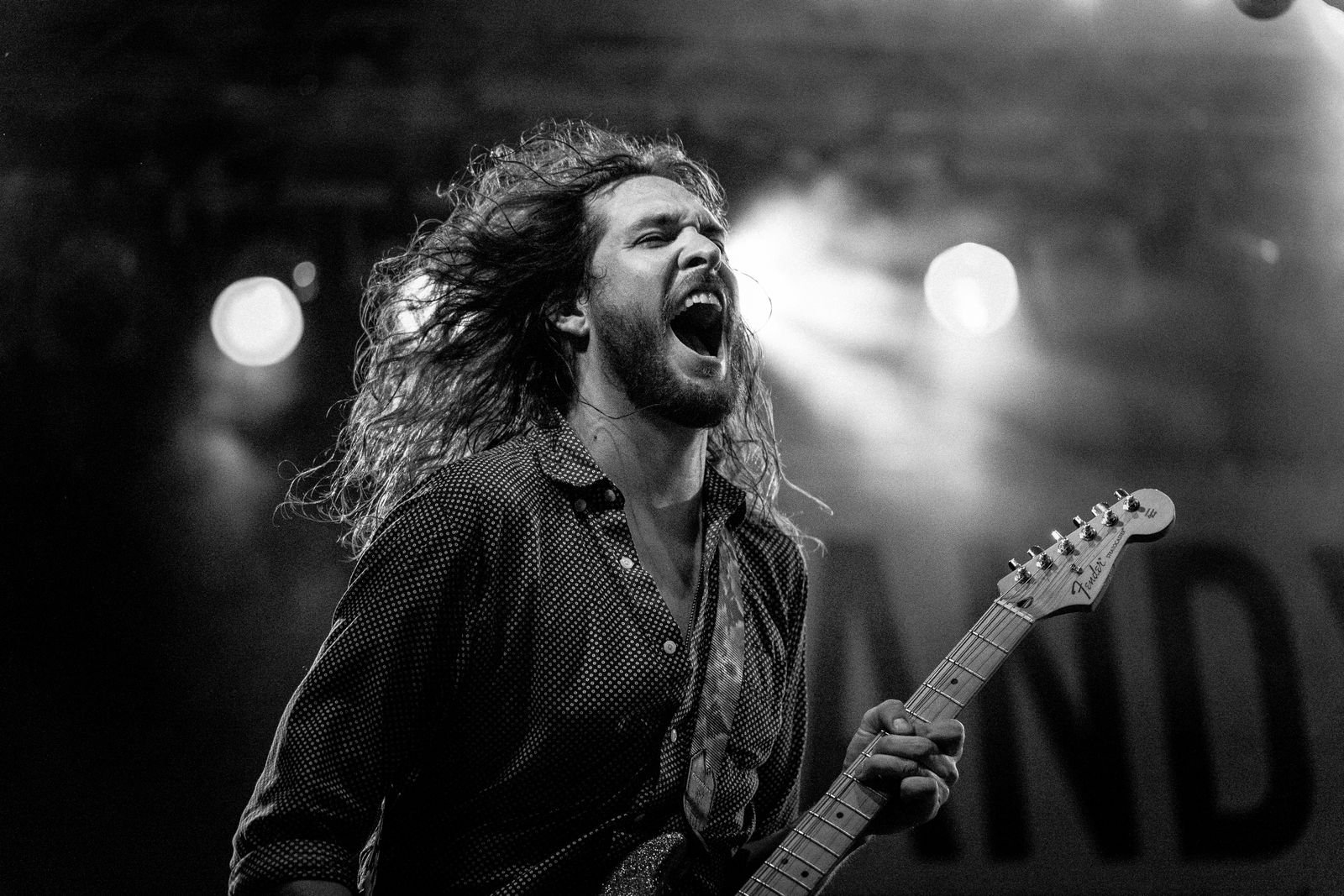
That branding was inseparable from the photography. Charles Peterson’s grainy, motion-blurred concert shots defined how the rest of the world pictured Seattle before they’d heard a note. By 1988, Mudhoney’s “Touch Me I’m Sick” had become the scene’s calling card — a fuzz-drenched single that Pitchfork and countless retrospectives still treat as ground zero for the genre’s aesthetic.
1989 to 1990: the majors come knocking
The turn of the decade is when the underground stopped being underground. Nirvana’s debut Bleach arrived on Sub Pop in 1989 for a recording budget famously reported in the low hundreds of dollars. The same year, Soundgarden signed to A&M, becoming one of the first Seattle bands to make the major-label leap.
Then came tragedy that reshaped the map. In 1990, Mother Love Bone frontman Andrew Wood died of a heroin overdose just before the band’s debut album was released. His death indirectly birthed two landmark projects: the Temple of the Dog tribute record and, from the surviving members, the band that became Pearl Jam. Alice in Chains also released Facelift that year, sliding the heavier, sludgier wing of the genre into view.
1991: the year everything detonated
No year carries more weight on any grunge timeline than 1991. In a span of weeks that fall, three pillars dropped: Pearl Jam’s Ten, Soundgarden’s Badmotorfinger, and Nirvana’s Nevermind. The last one changed the music industry overnight, knocking Michael Jackson off the top of the Billboard 200 in January 1992 and proving that “alternative” could mean “number one.”
The cultural tipping point was real and sudden:
- Nevermind eventually sold tens of millions of copies worldwide, per Rolling Stone and chart historians.
- “Smells Like Teen Spirit” turned MTV into a grunge channel almost overnight.
- Major labels descended on Seattle looking for the next signing.
We dig into exactly why that single year hit so hard in our breakdown of the rise and fall of grunge, but on the timeline, 1991 is the hinge everything else turns on.
1992 to 1994: peak, backlash, and collapse
Success curdled fast. 1992 was the commercial high-water mark — Cameron Crowe’s film Singles romanticized the scene, Pearl Jam and Soundgarden played Lollapalooza, and flannel went from thrift store to department store. By 1993, the artists were already recoiling. Nirvana’s abrasive In Utero read as a deliberate rejection of pop polish, while Pearl Jam’s Vs. arrived alongside the band’s war with Ticketmaster.
Then 1994 brought the ending nobody could spin. Kurt Cobain died by suicide in April, and the symbolic center of the movement was gone. The bands didn’t all stop — AllMusic documents how many kept recording for years — but the era as a cultural phenomenon had closed. What came next was post-grunge, a glossier and more radio-friendly descendant that traded raw nerve for commercial reliability.
It’s worth resisting the urge to draw the line too cleanly. Soundgarden’s Superunknown topped the charts in 1994, the same year the era supposedly ended, and Alice in Chains’ self-titled record arrived in 1995. The genre didn’t switch off; it dispersed. Some bands grew, some imploded, and a flood of imitators chased the radio formula. But as a unified cultural moment with one city at its center, the window that opened with Green River in 1985 had effectively shut by the time the calendar turned.
The bottom line
Laid out year by year, the grunge timeline reveals a slow six-year climb followed by a three-year explosion and an abrupt, tragic finish. From Green River’s first EP in 1985 to Cobain’s death in 1994, the genre packed an entire rock-and-roll life cycle into less than a decade. That compression is part of why it still fascinates. Few movements rose so far so fast, or burned out with so much left unsaid. To go back to where it all began, start with the origins of grunge and follow the dates forward.