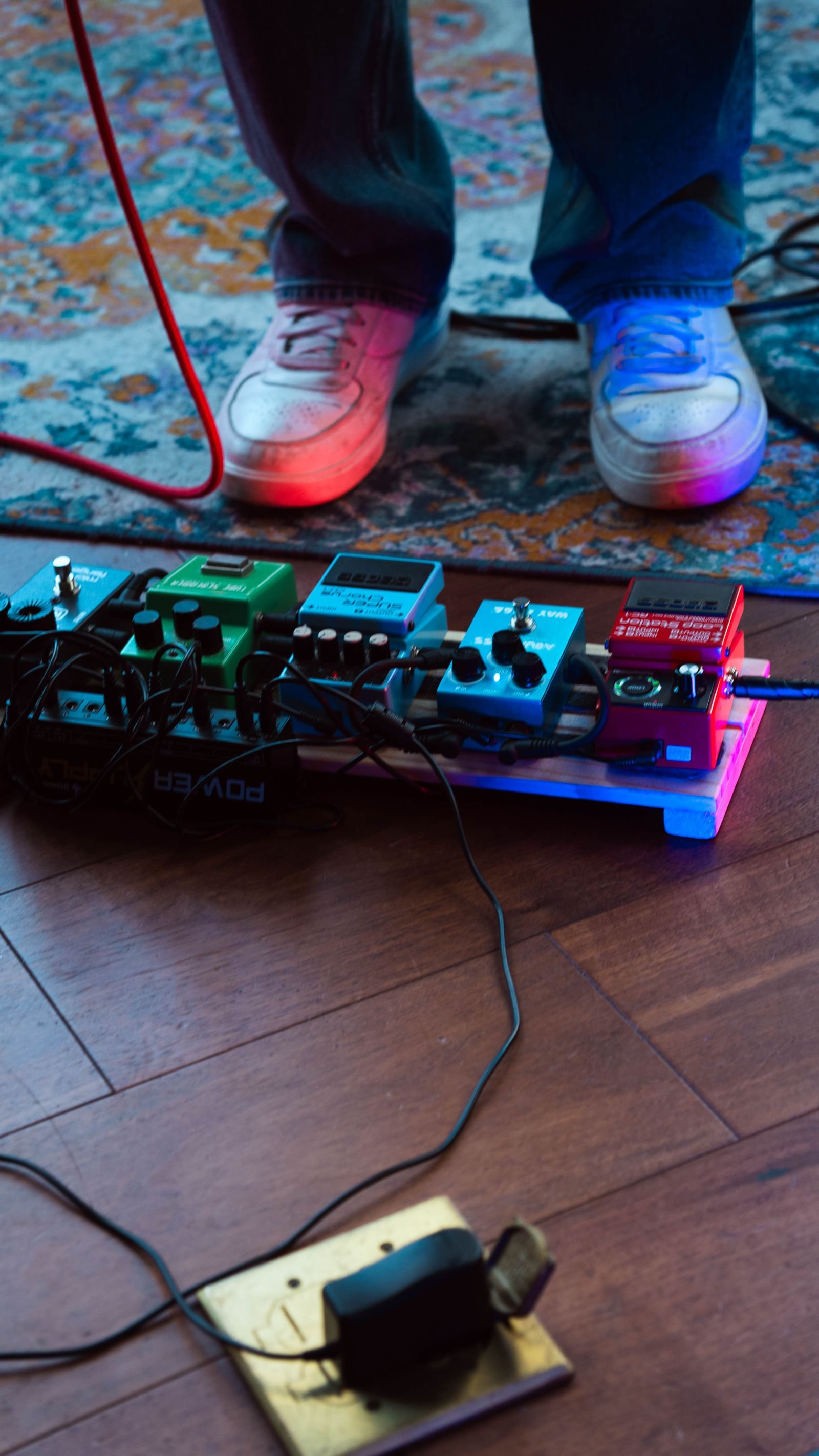
The Essential Pedals for Grunge Tone
The essential grunge pedals that shaped the Seattle sound, from the Big Muff and ProCo RAT to the Boss DS-1. Real models, settings, and signal-chain tips.
Grunge pedals are refreshingly simple. While other genres chased sprawling rigs, the Seattle bands mostly leaned on a fuzz, a distortion, and maybe a delay. The magic was in choosing the right boxes and slamming them into a loud amp. This guide covers the essential grunge pedals that built the era’s tones, with real models, recommended settings, and how to chain them so they sound massive instead of muddy.
The Big Muff: the cornerstone
If you buy one pedal, buy a Big Muff. The Electro-Harmonix Big Muff Pi is the defining fuzz of heavy alternative rock, a thick, sustaining, almost orchestral wall of distortion. Smashing Pumpkins built whole albums on it, J Mascis of Dinosaur Jr. lived inside one, and its DNA runs through countless grunge records.
What makes the Muff special is its violin-like sustain and scooped, woolly character. It turns a single power chord into a slab of sound. Settings to start with:
- Volume: unity or slightly above, to keep your level steady when you kick it on.
- Tone: around 11 o’clock; push higher for cut, lower for warmth.
- Sustain (gain): 2–3 o’clock for that endless, saturated bloom.
There are dozens of versions and clones. The classic green Russian and the NYC reissues both nail the sound, and you can find them cheap on Reverb. For the full picture of how fuzz built the genre, our deep dive on the Big Muff and grunge is the next stop.
One thing to understand about the Muff is that it has a scooped midrange, which can make it vanish in a band mix where the bass and vocals are competing for the same space. The fix is either to push the tone control higher for more cut or to stack a lighter distortion or a clean boost in front of it to firm up the mids. That stacking trick is how players got a Muff to roar over a full band without disappearing, and it’s worth experimenting with before you blame the pedal.
The ProCo RAT: grit with an edge
Where the Muff is woolly and round, the ProCo RAT is sharp and aggressive. It’s a distortion with a hard-clipping bite and a unique filter control that lets you dial in everything from a gritty crunch to a searing lead tone. Kurt Cobain and Thurston Moore of Sonic Youth both kept one on the board.
The RAT excels at cutting through a dense mix. Where a Big Muff can disappear under cymbals, a RAT stays present and angry. Try the distortion around 2 o’clock, filter rolled back to taste, and let your amp do the rest. It’s a staple you can grab new from Sweetwater.
The Boss DS-1: the affordable workhorse
No pedal says “I started on a budget” like the orange Boss DS-1. It’s cheap, indestructible, and mid-forward, which makes it perfect for grunge. Cobain used a DS-1 (and later the DS-2 Turbo) as a core part of his dirt, and it remains one of the best first distortion pedals you can buy.
The DS-1 shines when you push your amp with it rather than relying on it for all your gain. Set the level high, the tone around noon, and the distortion moderate, then let it shove your already-crunchy amp into a thicker, angrier place. It stacks beautifully in front of a Big Muff for solos.
It’s worth understanding the difference between these three flavors of dirt, because picking the right one for a part is half the battle:
- Fuzz (Big Muff): the most extreme, with heavy clipping, long sustain, and a scooped, woolly voice. Best for big single-note leads and crushing chords.
- Distortion (RAT, DS-1): harder-edged and more controlled, with stronger midrange and better note definition. Best for tight rhythm work.
- Overdrive: the mildest, mostly used in grunge as a boost to push an already-dirty amp rather than as a main sound.
Knowing which is which lets you build a board that covers verses, choruses, and solos without redundancy.
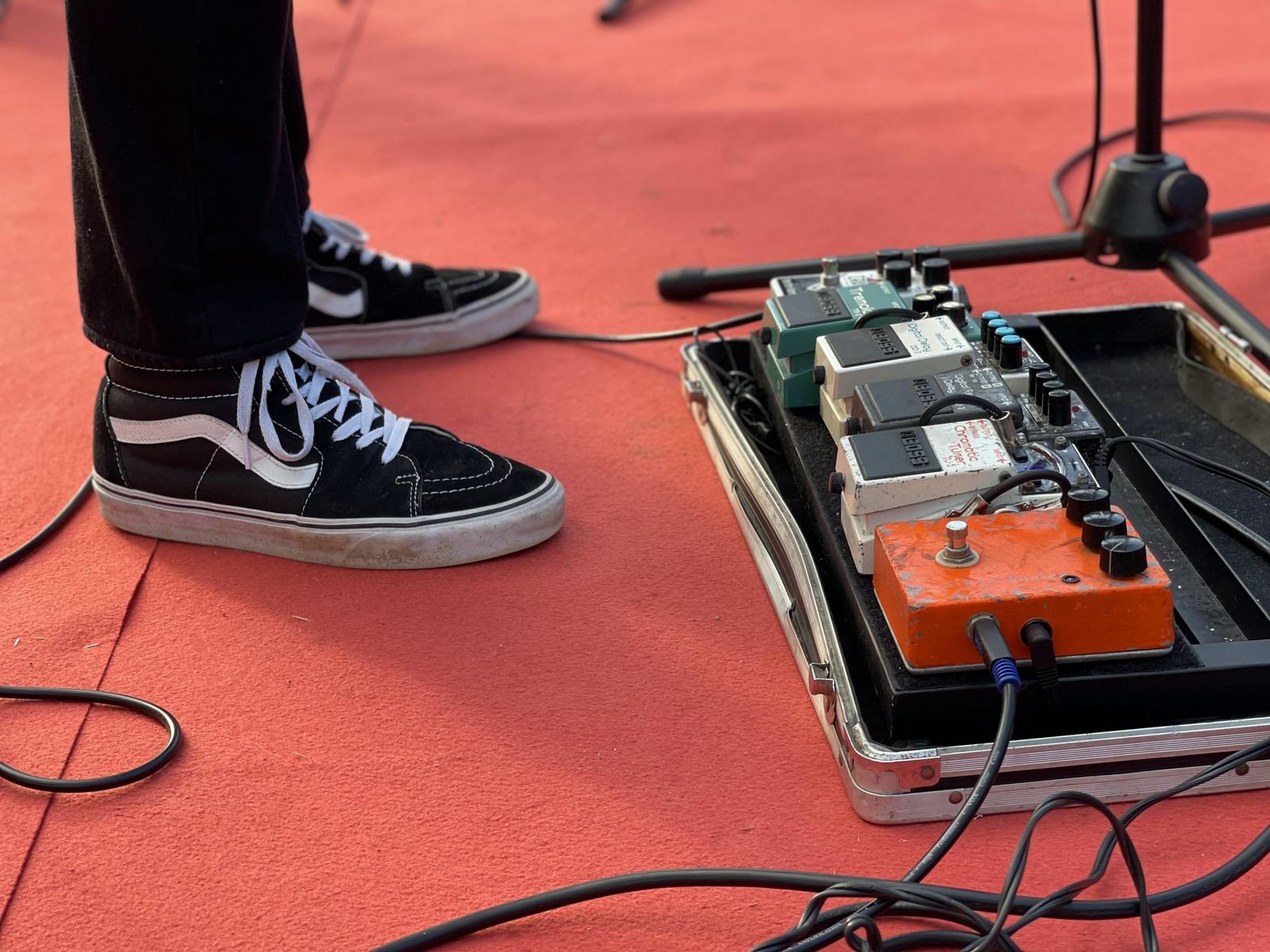
Rounding out your grunge pedals board
Beyond the core dirt boxes, a few support pedals round out a grunge rig without cluttering it. The genre rarely went for lush ambience, so keep these subtle.
| Pedal | Role | Setting tip |
|---|---|---|
| Big Muff Pi | Main fuzz / leads | High sustain, tone at 11 o’clock |
| ProCo RAT | Aggressive distortion | Filter rolled back, dist at 2 o’clock |
| Boss DS-1 | Stackable crunch | Level high, push the amp |
| Analog delay (Boss DM-2) | Slap-back thickening | Short time, low mix |
| Chorus (Boss CE-2) | Clean shimmer | Light, for unplugged or verses |
| Wah (Cry Baby) | Lead expression | McCready leaned on it hard |
A subtle chorus on a clean verse, then a Muff for the chorus, is the entire loud-quiet-loud trick in two pedals. A Cry Baby wah adds the vocal, expressive quality you hear all over Pearl Jam’s solos.
Signal chain and how to stack
Order matters. Get it wrong and your gain pedals fight each other; get it right and they stack into a controlled, massive tone. A reliable grunge chain runs like this:
- Guitar into your wah first, so it tracks your pickups cleanly.
- Distortion (DS-1 or RAT) next, as a tighter base layer.
- Fuzz (Big Muff) after the distortion for thick leads on top.
- Chorus, then delay, last in the chain so the modulation sits over the dirt.
The key habit is to not run everything at once. Pick one main dirt pedal per part and use your guitar’s volume knob to clean it up. Stacking a DS-1 into a Big Muff is a classic move for lead boosts, but for rhythm, less is usually more. The bands who pioneered these tones in how to get a grunge guitar tone mostly kicked on a single pedal at a time.
Budget building and what to skip
You can assemble a complete grunge board for surprisingly little money, and resisting the urge to overspend is part of the spirit. The original players bought what was cheap and available, and the modern used market makes that even easier. A Big Muff, a DS-1, and a used analog delay will cover the vast majority of the genre, and all three turn up constantly on Reverb for under a hundred dollars each.
A few things to skip, at least at first:
- Boutique fuzz clones. The standard Electro-Harmonix reissues already nail the sound; you don’t need a $300 hand-wired version to play grunge.
- Heavy reverb. Grunge is a dry genre. A wash of ambience washes out the aggression.
- Noise gates and EQ pedals. Useful for metal precision, but the genre thrives on a little uncontrolled noise and hum.
- Multi-effects sprawl. A simple board you understand beats a complex one you fight.
Spend your money on one or two great dirt pedals and a louder amp before anything else. That combination, available cheaply through Sweetwater, is where the tone actually lives.
The bottom line
The essential grunge pedals come down to three boxes: a Big Muff for thick fuzz, a ProCo RAT for aggressive cut, and a Boss DS-1 for affordable, stackable crunch. Add a touch of delay, chorus, or wah and you’ve covered the entire genre. Don’t overbuild the board. Get a couple of great dirt pedals from Sweetwater or Reverb, slam them into a loud amp, and let your hands and your volume knob do the rest.